I did a Dexa scan for the first time
Getting a baseline of my body composition
Published: 2025-11-26
How my day looked like
I usually wake up around 0430 these days, in order to eat, digest and let my body temperature raise enough such that I am prepared for our training at 1000. Today (Wednesday) was an off day, so I booked a DEXA scan appointment at 1000 somewhere near downtown San Diego. For the folks who don’t know, DEXA scan is a medical imaging test that can measure your body composition (lean mass, fat mass, bone density), and it is considered the golden standard for body composition measurement, especially fat percentage. Imagine this is an upgraded version of a smart scale or an InBody measurement. I wanted to do this for a while to get a more accurate baseline of my body fat level, such that I can plan my diet and training better.
Before booking the scan, I thought this professional sounding test would be quite expensive and it would be in a clinic. Turns out it was only 50 USD and it was in a van parked on a random street.
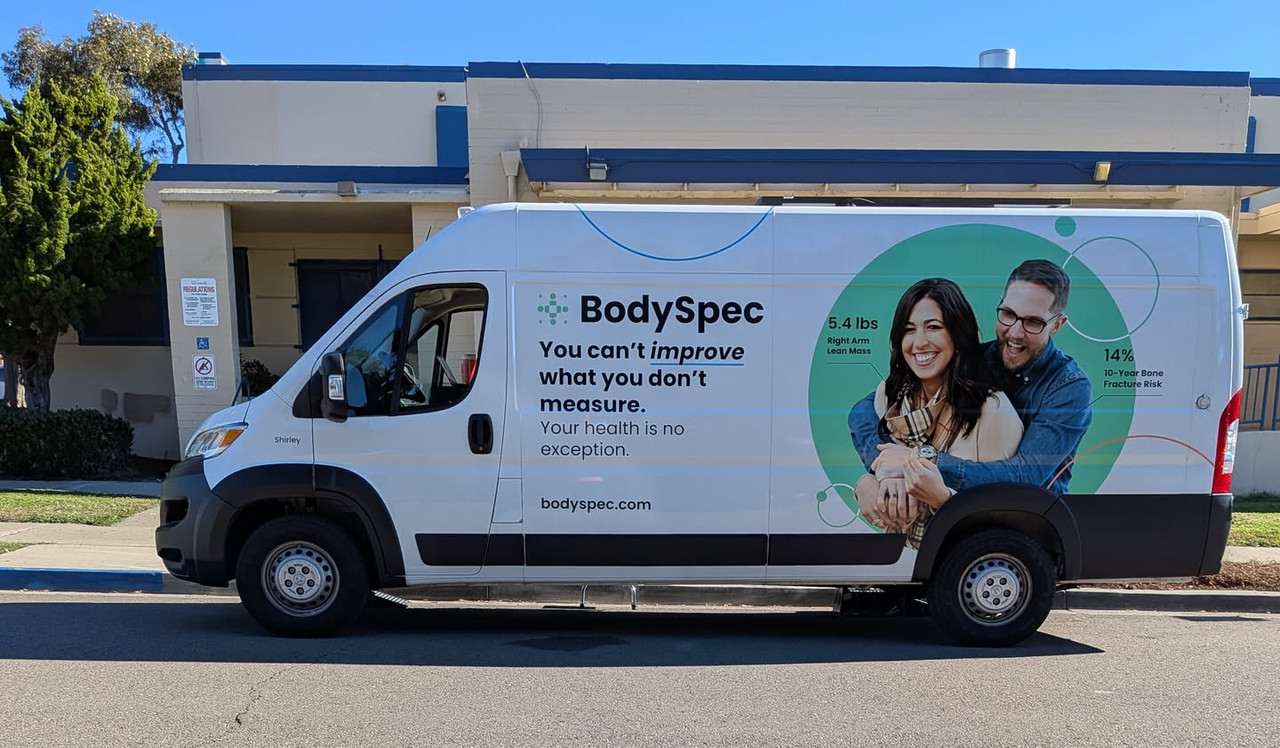
The whole procedure was quite quick, took less than 15 minutes from checking in to driving off. It might look shady but it was certainly legit and professional. If you want a calibration point, definitely look up options in your region.
The result
Body fat percentage
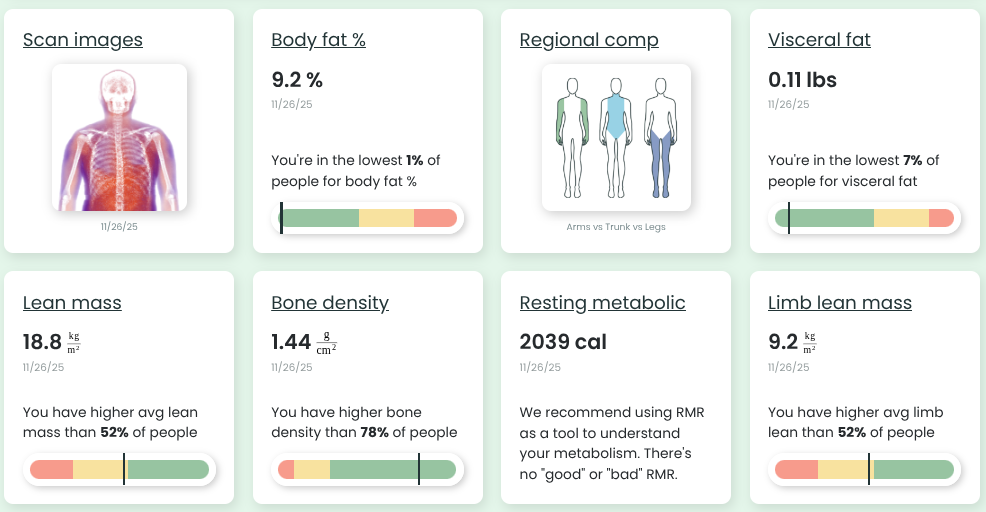
To be honest I was hoping to have around 15% body fat so I can have an easier time cutting, but the result comes back showing 9.2% body fat, which is quite lean by normal people standard.
In retrospect, by the time of the scan usually I have almost eaten half of my daily calories and drunk quite a bit of water, so in the end I was about 5 lbs heavier than the weight I measured in the morning. The hope is this underestimate my body fat percentage which implies I can have a bit more leeway when cutting.
Bone density
I am not exactly sure what to make out of this. On one hand I guess I am happy I have strong bone, but on the other hand I cannot change my bone density much. Does this means I am heavy or it is normal for athlete to have higher bone density. Overall, I am some what glad that I am not all the way to the top 10%, which I think are mostly powerlifters and weightlifters who have to carry a lot of weight. This means while my bones are resonably strong, I am not too heavy for jumping high.
And also, now I have proof that I really sink even tho I am complelely relaxed in the water. It is physics, checkmate.
Resting Metabolic Rate (RMR)
This is an important number since in order to lose weight, I have to be in a calorie deficit. I am trying to keep my daily intake below 2000 kcal per day, and burn at least 300 calories no matter whether it is a training day or not. While it is not strictly necessary to know the RMR to 4 significant digits, since what one can do is simply monitor the weight change over time and adjust the intake accordingly. But it helps me plan out once I am lighter, how much I should cut in calorie budget to continue losing weight.
What’s going on with lean mass?
One thing that I was confused about when I first saw the report was where I was placed in the lean mass distribution. The lean mass index they quoted in the chart was 18.8 kg/m², which placed me just above the median of the distribution. The question is, how come my lean mass is quite average when my body fat is so low?
Once I looked into the definition, it makes more sense. It is essentially a fat and bone adjusted BMI. For an athletic person who just workout normally, the typical expectation is one could have more lean mass than a person who doesn’t workout so one can expect to have higher lean mass index. However, a high jumper needs to simultaneously be strong and light, meaning our BMI tends to be on the lower side (The lowest I ever recorded is 18, which was a bit underweight.). So I don’t think it is surprising that my lean mass index is near average, and maybe in a few month that will even drop a bit as I lose some weight.
I am gonna make a video about this
I figured instead of typing it out here, I want to post a video on my channel dive deeper into explaining the result. One thing I think it would be fun to discuss is since I don’t train muscle for their size or aesthetics, a 9% body fat looks quite different from what you might have seen on the internet. Also my current weight goal for maintainence is around 68 kg (currently 73kg), which probably requires me to lose some fat as well as muscle. And I think during main competition season I may even want to drop to 63 kg, which I was unintentionally at during my high school days by being poor. This serves as a good baseline and see what I will be in the next season.